The After Hours Answering Service Question Most Service Business Owners Get Wrong
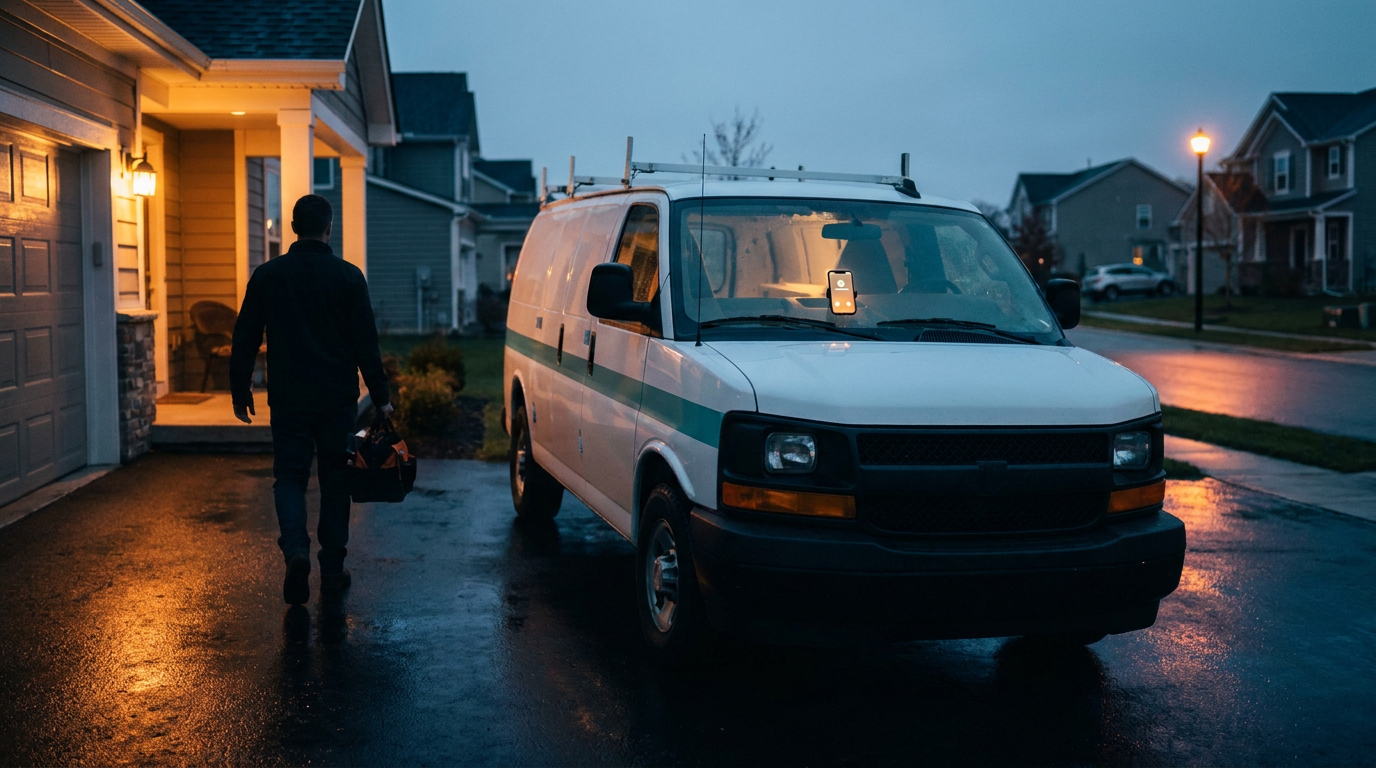
It's 7:42 PM on a Tuesday. A homeowner walks into the basement and steps in an inch of cold water. She grabs her phone and starts calling plumbers. Three voicemails. One ringer that no one picks up. Then a real voice on the fourth call. By 7:51 PM she has a $2,800 emergency job booked with a company she'd never heard of an hour earlier.
You were one of the first three calls. You just didn't know it.
This is the part most owners get wrong about an after hours answering service for a service business. They treat it like an option. A nice-to-have. Something to set up "when things slow down." But every night, every weekend, every long lunch is a quiet auction. The owner who picks up first wins the job.
The question isn't whether you need after-hours coverage. The question is which kind, and how you decide.
How Big Is the After-Hours Window for a Service Business?
For a 9-to-5 office, after-hours means a few stray calls past 5 PM. For a service business, after-hours is most of your day.
Run the math. Your office hours are maybe 8 AM to 5 PM, Monday through Friday. That's 45 hours of "open." There are 168 hours in a week. So 73% of the week is after-hours. Calls don't spread evenly across that time. They never do. But it's still a huge window.
Now layer on urgency. A burst pipe at 11 PM. A dead AC on a 95-degree Saturday. A garage door that won't close at 9 PM with two cars stuck inside. These calls turn into the best jobs of your week. The buyer has no time to shop around. They call. They book the first one to answer. They pay what's quoted.
Here's what we see across our client base. Sixty to seventy percent of true emergency calls in HVAC, plumbing, and electrical land outside work hours. That's not a hard outside stat. That's just what we see in the call logs. Your number may be different. The point is the same. After-hours is not the edge of your day. It's the bulk of your jobs.
What Are Your Real Options?
Owners think they have ten options. They actually have four. Know the four and you can pick.
Option 1: Voicemail.
Cheap. Familiar. Almost useless for new callers. HubSpot data, cited in a recent review of overflow services, found that 58% of callers want a live person. They don't want voicemail. The other 42% will leave a message. Most of them call your rival next. Voicemail is a tax you pay to your competition.
Option 2: A receptionist or staff with an on-call rotation.
Works for a season. Then someone burns out. Or quits. Or has a kid get sick on the night your busiest week of the year hits. People don't scale to a 24/7 problem.
Option 3: A call center or live answering service.
A real person picks up. They read from a script. Cost runs $200 to $1,500 a month, based on call volume. The catch: you're one of forty shops that agent handles that hour. They can take a note and dispatch in a crisis. But they don't know your prices. They don't know your service area. They don't know which customer got a deal last visit. The hand-off is generic.
Option 4: An AI voice assistant for after-hours and overflow.
A live voice picks up in under 30 seconds, day or night. It gets the caller's name. It gets why they called. It gets how urgent it is. Then it sends you a full intake by text or email in seconds. For real crises, it routes to whoever is on call. For routine jobs, it books a call back for the morning. The caller hangs up feeling like a real shop took the call. The chat flowed like one.
Take a look at how Vantyro's Voice Assistant handles this kind of overflow work. Live in 5 to 10 business days, never sick, never on vacation, never on hold.
Voicemail vs Callback vs Always-On: The Coverage Decision Tree
Here's the simple way to choose. Three questions, in order.
Question 1: Is your average job worth more than $300?
If yes, voicemail is a bad call. Lose one $1,200 HVAC repair and you've paid for a year of any option on this list. If your ticket is under $300, voicemail might still work. Some small cleaning or handyman jobs fit there. But it still costs you the loyalty of repeat buyers.
Question 2: Is at least 20% of your work true crisis work?
If yes, you need a live answer. Not a call back. A homeowner with water on the floor will not wait till 8 AM. They will call till someone picks up. Live answering, human or AI, gets those jobs. A call back the next day loses them.
Question 3: Do you have staff to cover nights, every night, all year?
If yes, you are running a 24/7 dispatch shop. Most owners burn out in three years doing that. If no, you need a system that doesn't get tired.
Two honest yeses on the first two and a no on the third? Your default is always-on answering. A human service or an AI voice agent.
Overflow vs After-Hours: The Difference That Matters
Most posts use these words to mean the same thing. They don't.
Overflow is the calls that hit during work hours when your team is busy. The phone rings. No one picks up. Same gap as after-hours, just a different time of day. Most shops lose more cash to weekday overflow than to true after-hours. That's when the call volume spikes.
After-hours is nights, weekends, and holidays. Fewer calls per hour. But more crisis calls per ring.
A good setup covers both. Pick a system that handles the 11 AM "we're all on jobs right now" moment. And the 9 PM "I came home to no heat" moment. Same way. Same speed. Solve one and you've fixed half the leak.
I get it. Most owners I talk to know they're missing calls. They just haven't had time to fix it. When you're running the jobs and the shop, the office stuff gets pushed to next week. And the next. And the next. The fix is one choice, made one time. Then it just runs.
Stop Renting Out Your After-Hours Calls
Every night you let go to voicemail is a night your rival's phone gets the call. The fix isn't more hustle. It's a system that picks up when you can't.
A Revenue Leak Audit takes 20 minutes. It shows you what your missed calls are costing you, hour by hour. Book yours free.
Frequently Asked Questions
- What percentage of service business calls happen after hours?
- For most trades, 30% to 50% of calls land outside 9-to-5 hours. Crisis calls run higher. Vantyro's data shows 60-70% of true emergency calls in HVAC, plumbing, and electrical come in after hours. The split depends on your trade and your market.
- What's the best after-hours answering service for a small service business?
- The best fit depends on call volume and job size. Live human services like Ruby Receptionists or AnswerConnect work well for low-volume work. AI voice agents like Vantyro's Voice Assistant work well for higher-volume trades. Speed and a clean intake matter more than chat length.
- How much revenue does a service business lose to unanswered after-hours calls?
- The Vantyro benchmark: the average shop loses $72,000 or more per year to missed calls. After-hours and weekday overflow are the two biggest leaks. Run your own math: missed calls per week, times close rate, times job size, times 52.
- Is voicemail enough, or do customers expect to talk to someone after hours?
- Voicemail is not enough for most service shops. HubSpot data shows 58% of callers want a live voice, not voicemail. Crisis callers will hang up and dial the next name on the list in seconds.
- What's the difference between an overflow service and an after-hours service?
- Overflow handles calls during work hours when staff is busy. After-hours handles nights, weekends, and holidays when no one is in the office. A full setup covers both. Most shops lose more cash to weekday overflow than to true after-hours.
- Can an AI voice agent handle emergency service calls after hours?
- Yes, when set up right. The AI gets the caller's name. It gets the location. It gets what's wrong. It scores the urgency. Then it routes real crises to whoever is on call. Routine callers get booked for the morning. No one's sleep gets cut.

Steve Spentzas
Founder, Vantyro
Steve grew up in the trades and spent 20 years managing energy programs at Siemens, CLEAResult, and the Gas Technology Institute before building Vantyro to fix the revenue leaks that cost service businesses real work every day. Read more
See Where Your Business Is Leaking Revenue
Free 20-minute assessment. We map your intake process and show you the exact dollar cost of what you're missing.
Book Your Free Assessment