75% of Customers Want to Text Your Business. Most Service Companies Have No System for It.
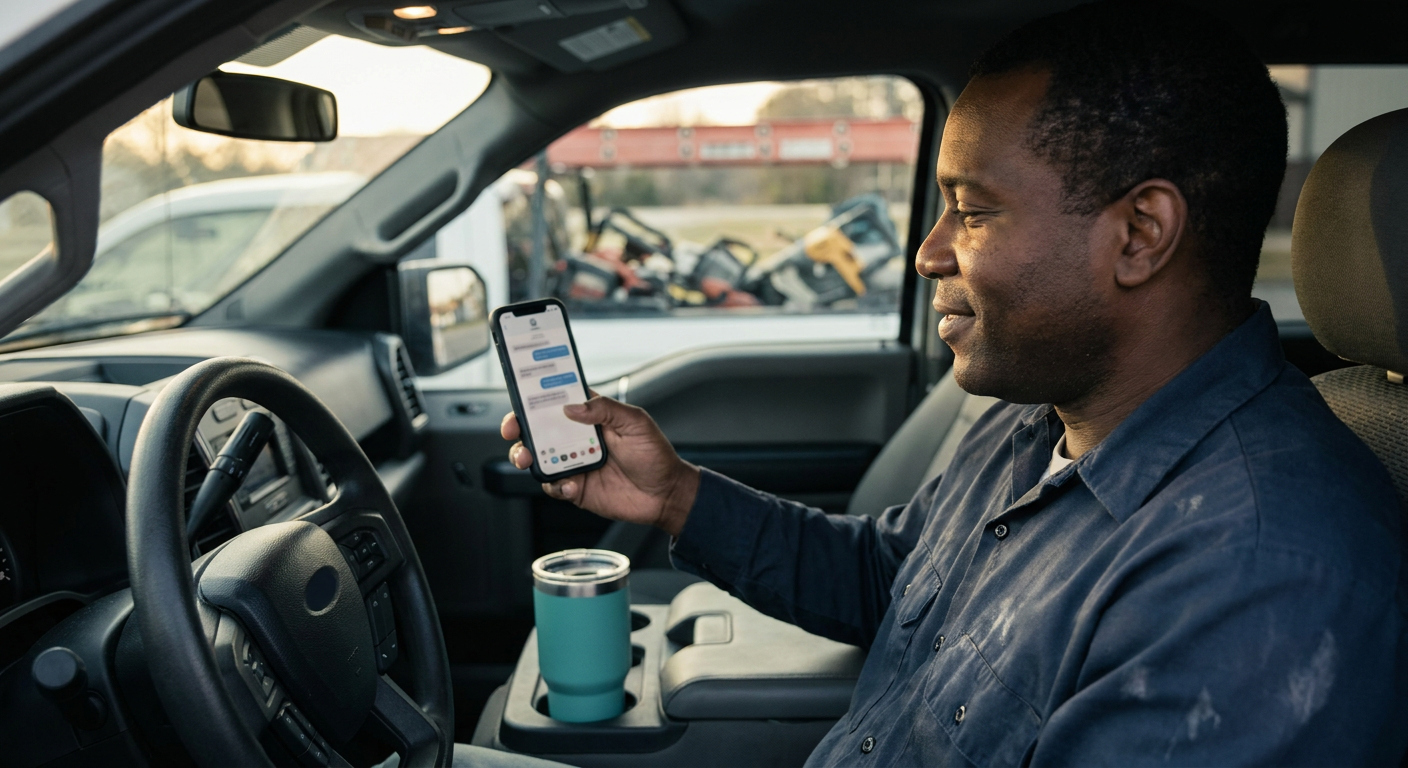
Your phone rings less. Your text threads get longer. And somewhere between job sites, customers are texting your personal cell. Half of them never got a reply.
This isn't random. It's a shift.
A 2025 Meta and Kantar study tracked 11,000 people. Seventy-five percent said they want to message a business the way they message a friend. Not call. Not email. Text.
The format is changing fast too. Apple and Google are now testing cross-platform RCS. That's Rich Communication Services — the upgrade to plain SMS. It brings verified business names, logos, and buttons you can tap to any phone. iPhone or Android.
Yes, your customers want to text you. And in 2026, no system means lost work.
Here's what's changing, why it matters, and what to do about it.
What Is RCS, and Why Does It Matter for Service Businesses?
SMS is plain text. It has been around since 1992. No branding, no images, no read receipts.
RCS is the upgrade. It runs in Google Messages on Android. Apple added it in iOS 18 in late 2024. RCS now reaches about 70 to 85% of phones in major markets. That number keeps climbing.
With RCS, your message shows things a plain text cannot. Your name and logo. A "tap to book" button. A photo of the job. Read receipts, so you know the customer saw it.
For a service business, this is a trust signal. A verified badge tells one thing: this text is from the real company, not a scammer.
You don't need a custom app. Texting platforms send messages in RCS on newer phones. On older phones, it drops back to SMS. Nothing gets lost.
The shift is here. RCS grew 550% in 2024 (Infobip). U.S. users now send over 1 billion RCS messages a day (Google, May 2025). This isn't a coming trend. It's live.
Do Customers Actually Prefer Texting Over Calling in 2026?
The data is clear. Customers don't just prefer texting. They're dodging the phone call.
In that same 2025 Meta and Kantar study, 69% of people said being put on hold wastes their time. They don't want to call and wait. They want to send a quick message and get back to their day.
Text messages get opened up to 98% of the time (CM.com). Most get read in under three minutes. Email? A 20% open rate counts as good. If you text a customer, they almost surely see it. If you email them, there's a one-in-five chance they open it.
Here's how it plays out. A homeowner's dishwasher is leaking. It's 11 AM. They find two plumbers and text both. The first replies in two minutes. The second calls back two hours later. Who gets the job?
Seventy-eight percent of customers buy from whoever responds first (Lead Connect, 2024). Not best price. Not most reviews. Speed.
How Fast Do Customers Expect a Text Reply?
Fast. Faster than most service businesses move.
People now expect a reply in 10 minutes (HubSpot, 2025). For texts, the bar is higher. Under 5 minutes is where you keep leads. After 30 minutes, you've likely lost them.
InsideSales.com and MIT studied this. Reach a lead in 5 minutes, not 30. It's 21 times more likely to close. That sounds made up. Watch it play out in a real shop. The gap is brutal.
Owners aren't ignoring texts on purpose. They're under a sink. They're up on a roof. A text sits unread for 40 minutes. The customer who texted two companies already went with whoever answered first. That's what happens when the way people reach you changes faster than your system does.
Customers text more. Most businesses are still built to answer phones. That's the gap.
Why a Personal Cell Phone Isn't the Answer
A lot of owners handle texts on their personal phones. It works for a while.
I get it. When you're doing the jobs and running the business, setting up a real system feels like next week's problem. Next week never shows up. So your personal phone becomes the default. That's not a failure of effort. It's a failure of setup.
Here's what breaks. Messages get lost while you're on a call. Nothing is trackable. You can't see which texts got a reply or how long they sat. Your personal number is now your business line, and people text at 10 PM on a Saturday. Your team can't help because they can't get into your phone. And a random cell number builds less trust than a verified business badge.
A personal phone is a solo fix. It doesn't scale.
Here's what shows up all the time. An owner has three text threads, two Facebook Messenger chats, some website chat messages, and unread emails. All on different apps. Nothing connected. One of those is a $4,000 job that's been sitting since Tuesday.
That job is still sitting there.
How Should a Small Service Business Handle Customer Texts?
Here's how the system works. One inbox. Every message from every channel lands in one place.
Calls, texts, website chat, Facebook Messenger, Instagram DMs, Google Business Messages. One screen. Every message gets a reply. Nothing falls through.
That's what the Response Control Center does. It pulls every channel into one dashboard. It tracks reply times so you know when something's going unread. Your team replies from one place without logging into five apps.
The setup is simple:
Get a separate business number. Stop using your personal cell. Pull every channel into one inbox. Turn on reply alerts. If a message sits unread for 10 minutes, you want to know. Build a few quick-reply templates. "Got your message, someone will call you in 30 minutes" holds the lead while you finish the job. Then track it, so you know which messages are open and how fast your team moves.
That's it.
One more thing worth knowing. If your business misses a call, a missed-call text can go out to that caller in 30 seconds. Eighty-five percent of missed callers never call back (CallRail, 2025). But a quick text keeps the chat open. The lead doesn't go cold.
Is Business Texting Professional? Or Does It Look Sloppy?
Texting is the right channel now.
Customers aren't judging whether you text. They judge how fast you reply.
A slow reply looks bad on any channel. A fast, clear text from a verified number builds trust fast. Faster than a voicemail box ever could. With RCS, your logo and verified badge show up right in the thread. That reads like a real business.
The companies that look bad aren't the ones using text. They're the ones customers can't reach. Messages scatter across five apps. Half get no answer.
Texting done right is a trust signal. Texting ignored is a revenue leak.
Every week your customer texts go unread is another week a competitor picks up those jobs. A Revenue Leak Assessment takes 20 minutes and shows you exactly what it's costing you. Book yours free.
Frequently Asked Questions
- What is RCS business messaging and how is it different from a regular text?
- RCS stands for Rich Communication Services. It's the upgrade to plain SMS. With RCS, your messages can show your verified name, your logo, and buttons like "tap to book" or "get a quote." Apple added RCS in iOS 18 in late 2024. Now most phones in the U.S. can receive RCS messages. If a phone doesn't support it, the message drops back to a regular SMS on its own. Nothing gets lost.
- Do customers prefer to text a business or call it in 2026?
- Most prefer texting. A 2025 Meta and Kantar study of 11,000 people found 75% want to message businesses the way they message friends. Sixty-nine percent said being on hold wastes their time. Text messages get opened up to 98% of the time. For most service questions (booking, quotes, a quick follow-up), customers would rather text than sit on hold.
- How fast do customers expect a text reply from a business?
- Most expect a reply in 10 minutes. Reach a lead in 5 minutes, not 30, and it's 21 times more likely to close (InsideSales.com and MIT). For a service business, that window is everything. A customer texting two contractors at once will go with whoever replies first. Not the lower price. Not more reviews. The fast one.
- How can a small service business handle customer texts without being on the phone all day?
- Use a single inbox. One place where every message lands. Texts, web chat, social DMs, and more. A good system adds reply-time alerts. That way you know if something goes unread. Quick-reply templates speed up easy replies. And team access lets more than one person help. Vantyro's Response Control Center is built for this. Every channel in one place, with tracking so nothing slips.
- Is it unprofessional to run business texting through a personal cell phone?
- It causes real problems. You can't see which messages went unanswered. Your team can't help. There's no line between work and home. And people can't tell they're reaching a real business. A separate number through a single inbox looks right, keeps every message trackable, and lets your team cover when you're heads-down on a job.

Steve Spentzas
Founder, Vantyro
Steve grew up in the trades and spent 20 years managing energy programs at Siemens, CLEAResult, and the Gas Technology Institute before building Vantyro to fix the revenue leaks that cost service businesses real work every day. Read more
See Where Your Business Is Leaking Revenue
Free 20-minute assessment. We map your intake process and show you the exact dollar cost of what you're missing.
Book Your Free Assessment