Missed Calls During Peak Season: Why Your Busiest Week Costs You the Most Jobs
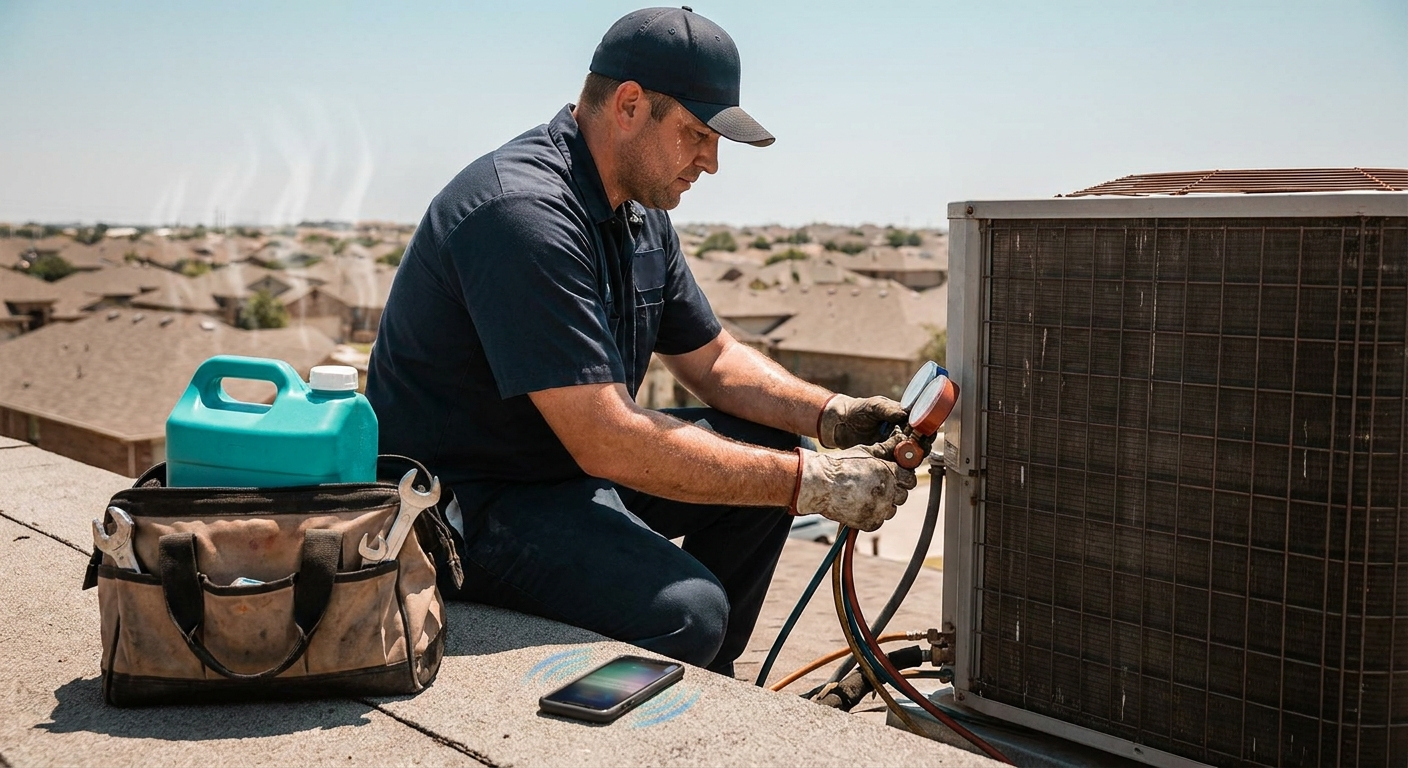
A heat dome just pushed 90 to 110 degree heat across the country. About 200 million people are living under it right now (AccuWeather). Some places have already broken more than 100 record highs in one stretch. Add roughly 250 record-warm nights on top of that (CNN). AC units are dying. Pool pumps are quitting. Pest control lines won't stop ringing.
Your phone hasn't stopped either. Not since Monday.
Fine, so you just answer faster, right? Not really. Your crew's already out on four jobs across town, phones buried in tool bags, dashboards buzzing with texts from customers just as hot and just as annoyed as the ones calling in.
This is exactly when missed calls during peak season do the most damage. A heat wave hits. Or a storm. Or the first hard freeze. Call volume jumps past anything your team can handle, and every ring you miss walks straight to the next name on the list.
Here's the real math on what a demand spike costs you. Then the fix. No new hires required.
How Many Calls Does a Demand Spike Actually Cost You?
So a couple missed calls a week, no big deal? Not once you see the number.
In a normal week, home service businesses miss 27% of the calls that come in (Invoca). More than one in four. Already bad.
Now add a surge.
Weekend call volume already runs rougher than weekday volume. About 41% of home-service calls go unanswered on weekends, versus 18% on weekdays (Cira). A heat wave stacks that same pressure onto every day. More calls come in. Fewer get picked up.
Here's a simple model. Say your shop takes 120 calls a day during a heat wave. About 15% go unanswered because your team's out on the tools. That's 18 missed calls a day. At a $750 average job, that's $13,500 gone in one day (surge model, TitanPro).
18 missed calls at a $750 ticket. That's a used truck, gone before dinner.
Run that same math across a five-day heat wave and you start seeing why the slowest, hottest, most miserable week of the year for your crew is also the week your competitor's phone rings with calls that should've been yours.
I can't promise your surge looks exactly like this. Nobody's heat wave matches another. But the shape is always the same: more calls, fewer hands, more money out the door.
What Happens When a Customer's Call Goes Unanswered?
Nothing good. That's the short answer.
The homeowner's AC dies at 2 PM in a heat wave. They call the first company that shows up. Nobody picks up. No voicemail callback either.
Most callers move on fast. 62% of people whose call goes unanswered call a competitor next (Cira). Some weeks that's three calls lost to voicemail. A heat wave week? Dozens, all before lunch.
That single missed call carries a real price tag too, and once you multiply it by the extra call volume a heat wave brings, it's easy to see how one bad week can cost more than a whole slow month, especially when every one of those calls was a homeowner standing in a hot house with cash in hand.
Each missed call costs a service business somewhere between $300 and $1,200, depending on the job (Cira).
There's no disloyalty in this. It's just a stressed homeowner in a hurry. Whoever answers first gets the job. Every time.
Why Your Busiest Week Is Also Your Leakiest Week
So is this just bad luck? No. It's math, plain and simple.
Your busiest week is your leakiest week. Same week. Every time.
Normally, missed calls cost the average service business more than $72,000 a year (Vantyro benchmark). Picture that as a slow drip. A call here. A call there. Month after month, quiet enough that you barely feel it. A demand spike squeezes that whole year's leak into a handful of days.
Heat waves hammer HVAC and pool companies, storms flood roofing and water-damage crews with calls, the first hard freeze buries plumbers under burst pipes, and every trade you can name has its own version of this exact week, the one where call volume spikes and staffing stays exactly the size it was back in March.
Your team's stretched thin doing the actual jobs. Nobody's sitting by the phone. That's math, not a staffing failure.
Actually, let me back up. It's not that your team dropped the ball. It's that peak weeks ask your phone lines to do more work than a small crew can physically do. No amount of hustle fixes that.
How Can You Answer Every Call During a Surge Without Hiring Anyone?
So you hire a temp for two weeks. Problem solved, right? Not really.
Post the job, interview a stack of people, train whoever you pick for two straight weeks while the rush is already underway, and then watch the whole arrangement end the moment things slow down, which means next year you're doing the exact same dance all over again.
That's not a hiring failure. It's the wrong tool for the job. What you need isn't another person. It's a system that scales the moment call volume does, then scales back down on its own.
A Voice Assistant fixes that exact problem: too many calls, not enough hands. It answers every call in under 30 seconds, day or night. Ten extra after a storm. Eighty during a heat dome, doesn't matter. It asks the caller why they're calling, grabs their name and number, and flags anything urgent. Your crew gets a clean summary instead of a blinking voicemail light.
No busy signal. No voicemail nobody checks in time. The job doesn't slide to whoever else picked up first.
If your business also takes calls through text, web chat, or social messages, the Response Control Center keeps every channel in one place. Nothing slips through while your team is buried in jobs.
Neither one needs a new hire. Neither needs a training week. They're working the second call volume spikes. That's when you need them most.
Every heat wave, storm, or first freeze rings your phone harder than your crew can answer. That's not changing. But your system can be ready before the next one hits. A Revenue Leak Assessment takes 20 minutes. It shows you what those missed calls cost during your busiest weeks. Let's have this handled before the next spike, not during it. See how a Voice Assistant fixes it.
</content>
Frequently Asked Questions
- How many calls do service businesses miss during peak season?
- In a normal week, home service businesses miss 27% of their inbound calls (Invoca). During a demand spike, that climbs fast. Weekends run rougher: 41% goes unanswered versus 18% on weekdays (Cira). A heat wave or storm makes it worse.
- What happens when a customer's call to a contractor goes unanswered?
- Most callers don't wait. 62% of people whose call goes unanswered call a competitor instead (Cira). They're usually dealing with something urgent, like a broken AC in a heat wave. They need an answer now, not a callback in an hour.
- How much money does a missed call cost a service business?
- Each missed call costs between $300 and $1,200, depending on the job (Cira). During a demand spike, that adds up fast. Take 120 calls a day with 15% unanswered. That's 18 missed jobs, about $13,500 gone in a day at a $750 ticket (surge model, TitanPro).
- How can a small service business answer every call during a demand spike without hiring more staff?
- A voice assistant answers every call automatically, no matter how many come in at once. It works around the clock, captures caller info, and flags urgent jobs first. Your crew stays on the tools, not sprinting for the phone. No seasonal hiring. No training week.
- Should I use an answering service or an AI voice assistant during my busy season?
- A traditional answering service depends on a person being on shift, so costs climb the moment volume spikes past what they staffed for. A voice assistant works differently. It answers instantly, one call or fifty at once, no cap. That fits a heat wave, storm, or holiday rush better than a staffed service ever could.

Steve Spentzas
Founder, Vantyro
Steve grew up in the trades and spent 20 years managing energy programs at Siemens, CLEAResult, and the Gas Technology Institute before building Vantyro to fix the revenue leaks that cost service businesses real work every day. Read more
See Where Your Business Is Leaking Revenue
Free 20-minute assessment. We map your intake process and show you the exact dollar cost of what you're missing.
Book Your Free Assessment