The TCPA Just Changed. Your Reactivation Texts Could Cost You $1,500 Each.
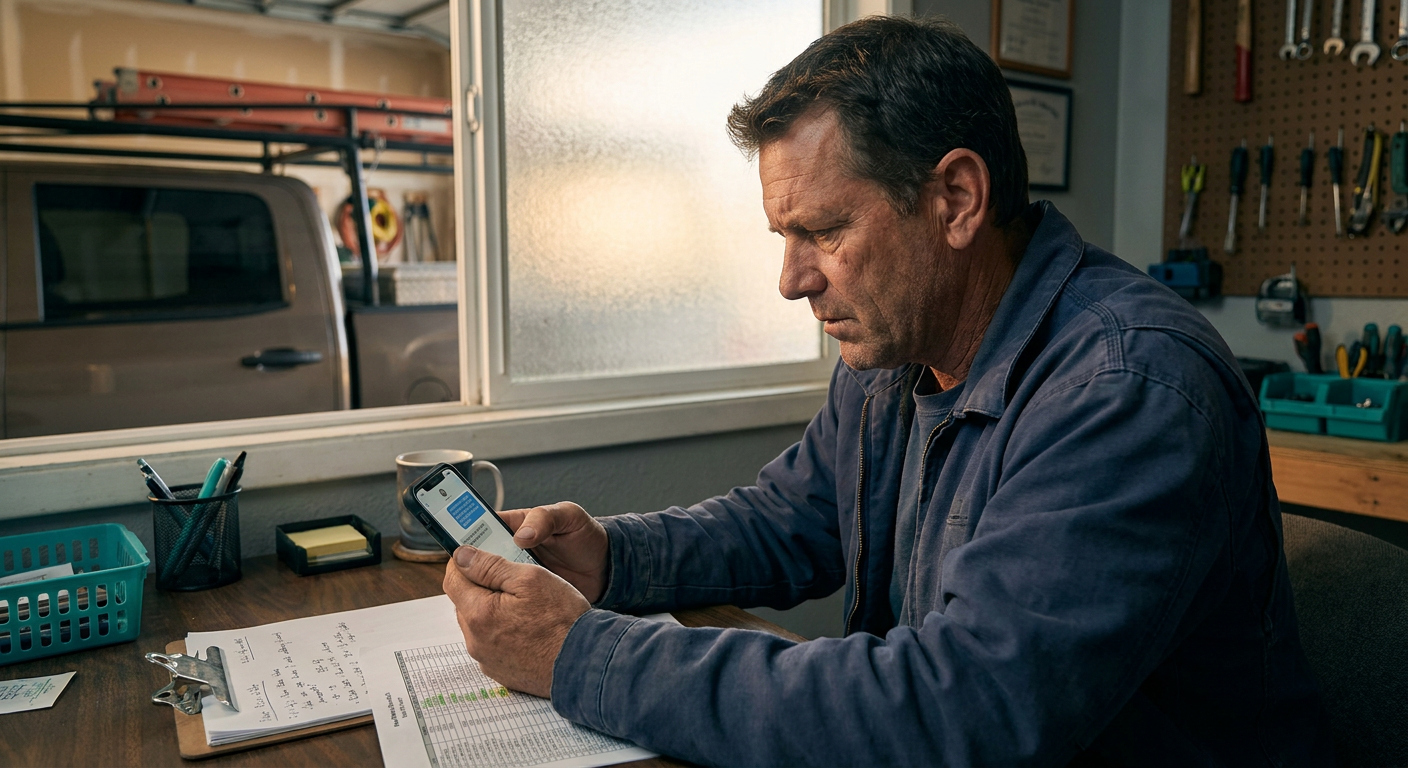
It's a Tuesday morning in April. A roofing company owner is loading a reactivation campaign. He's got 340 past customers in a spreadsheet. A hailstorm rolled through last week. He figures 10% will bite. That's 34 jobs, maybe $85,000 in revenue. He clicks send on the first batch and goes back to his coffee.
What he doesn't know: the FCC's new TCPA rule took effect that same week. Four of those 340 people had already told his dispatcher to stop. By voicemail. By email. By text to a different number. Nothing synced. The opt-outs lived in three places and no one connected them. He just sent four violations.
At $500 to $1,500 per message, that's up to $6,000 in fine exposure from one campaign. And he sent one last month too.
Here's the plain version of the TCPA text rules 2026 service business owners need to know. On April 11, 2026, the FCC's "revoke-all" rule took full effect. A customer can tell you to stop texting through any channel, not just a STOP reply. You then have 10 business days to stop. Every text after that window is a separate possible violation. The fix is one central place to track opt-outs across every channel your team uses.
This article is for info only and is not legal advice. Talk to an attorney who knows TCPA for guidance on your specific situation.
What Changed on April 11, 2026?
The Telephone Consumer Protection Act has always had opt-out rules. What changed is how broadly the FCC now defines a valid request.
Before the new rule, most businesses treated "STOP" replies as the standard. Customer texts STOP, you remove them, done. The FCC's "revoke-all" rule says customers can now revoke consent through any channel. A voicemail saying "please don't text me anymore" counts. An email to your general inbox counts. A reply to a different phone number counts. A verbal request to a tech on the job, logged later, can count.
Once you get that request, the clock starts. You have 10 business days to stop all robocalls and robotexts to that contact. Not 30 days. Not "when you get around to it." Ten business days.
The rule had been delayed twice. First to April 2024, then to April 2025. April 11, 2026 was the final date. No more extensions. The question isn't whether the rule applies to you. It's whether your setup can catch every opt-out and stop texts in time.
External sources: [FCC official notice DA-26-12A1](https://docs.fcc.gov/public/attachments/DA-26-12A1.pdf) | [Nelson Mullins 2026 mobile messaging guide](https://www.nelsonmullins.com/insights/alerts/fcc-download/all/mobile-messaging-in-2026-mind-your-opt-ins-and-opt-outs)
What Counts as a "Reasonable Means" of Revoking Consent?
This is where a lot of service business owners get tripped up.
The FCC has named several forms it considers reasonable.
Replying STOP to any message. This is the obvious one. But note it covers any message, not just texts from your main number. A customer gets a text from your Google Voice line and replies STOP. That counts.
An email or voicemail asking for no further contact. Think about how your business works. Customers call your main number and leave a message. They email the address on your invoice. They send a note through your website contact form. All of those can qualify.
A verbal request on a service call. "Hey, can you take me off your list?" A tech hears that and tells the office. That's a valid opt-out. Your team needs a process to capture and log it.
A reply to a different number than the one you texted from. You sent from your business line but they replied to your personal cell. Still counts.
The common thread: the customer doesn't have to jump through hoops. They can tell you in whatever way works for them. You're on the hook for catching it. That's a real shift from the old "STOP reply only" standard.
How Much Does a TCPA Violation Actually Cost?
Let's run the math on a real scenario.
Say you run a pest control company. You send quarterly service reminders to 200 past customers. That's a normal reactivation cadence. It usually pulls in repeat jobs. But say 12 of those 200 people opted out at some point, by email, by voicemail, by texting a team member. Those opt-outs never made it into your sending list.
You text them anyway. That's 12 possible violations per campaign, four campaigns a year. At $500 per message on the low end, you're looking at $24,000 in annual fine exposure. At $1,500 per message, that number is $72,000. Almost exactly what the average service business loses to missed calls in a year.
The TCPA is one of the most-litigated statutes in the United States. That's not an accident. Plaintiff attorneys bring these cases as class actions because the math works for them. One campaign sent to an unscrubbed list can snowball fast.
Most service businesses aren't trying to break the rules. They're using a texting tool in their CRM with no system to catch opt-outs that came in through a different channel. That's the gap the rule is closing. Right now, most service businesses have that gap wide open.
Why Most Service Businesses Are Exposed Right Now
Here's what the opt-out system looks like at most service businesses: it doesn't exist.
A customer calls to complain and says "don't text me." The front desk writes a note. The note goes in a folder. Nobody updates the CRM. Next month's reactivation batch pulls from the CRM. The text goes out.
Or a past customer emails "please remove me." That email goes to the owner's personal Gmail. The owner doesn't get around to it. The assistant running the SMS campaign doesn't have access to Gmail. The text goes out.
Or a tech on a job hears "I told your company to stop texting me." He means to tell the dispatcher. The dispatcher is busy. Nothing gets logged. The text goes out again next quarter.
An HVAC company following up on a quote from 60 days ago faces the same problem. If the homeowner asked to be removed when the estimate tech was on site, and that didn't get logged, the follow-up text is a violation.
This isn't a technology problem at its core. It's a routing problem. Opt-out signals hit your business through five different doors: text reply, email, voicemail, web form, verbal. There's no central place for all five to land. They get lost. Every lost opt-out is a possible $500 to $1,500 liability.
The 4-Part Fix for TCPA Safe Operations
You don't need to stop texting. You need a system that catches every opt-out and applies it everywhere. Here's what that looks like.
One central opt-out registry. Every opt-out from every channel, text reply, email, voicemail, web form, verbal log, goes into one suppression list. When you build or export a text campaign, that list scrubs against it first. This is the non-negotiable foundation.
A unified inbox that routes every opt-out to the same place. If your text replies go to one platform, your emails go to Gmail, and your voicemails go to a phone system no one checks, you can't build a clean registry. The Response Control Center pulls all your calls, texts, emails, web chat, and DMs into one place. Once you get the request through any of those channels, it lands where your team can see it and act within the 10-day window.
A suppression deadline. Once an opt-out is logged, someone on your team owns it. They apply it within 10 business days. That's very doable when opt-outs all land in one inbox. It's nearly impossible when they're scattered across four tools and three people. Keep a log: date the opt-out came in, channel used, date removed from running campaigns. That's your paper trail if you ever need it.
A check before every campaign. Before seasonal reactivation, post-storm outreach, or a quote follow-up series, pull your sending list and scrub it against your opt-out registry. The Reactivation Engine has suppression built into the workflow, so you're not checking a spreadsheet before every send. If your business does outbound work to new contacts, the Cold Outreach Agent runs with the same opt-out logic built in.
What You Can Do This Week
You don't need to rebuild it all before Monday. Three steps you can take right now.
Audit your opt-out channels. Write down every way a customer could currently tell you to stop texting. Text reply. Email. Voicemail. Website form. Verbal to a tech. Where does each one land today? If the answer is "nowhere in particular," that's your gap.
Build a suppression log. Even a shared Google Sheet beats nothing. Name, phone number, channel used, date logged, date removed from campaigns. Have one person on your team own it. That gives you a defensible paper trail if a claim ever comes up.
Check your last three campaigns. Pull the sending list from your last three SMS campaigns. Did anything go out to someone who had asked to be removed through any channel? If you're not sure, that uncertainty is the risk.
Then get a system in place that makes this automatic. Not a manual task that depends on someone having time that week. You can't catch every opt-out with a sticky note and a folder. But you can with the right setup. The setup is not complicated.
A note before the FAQ: nothing below is legal advice. TCPA cases turn on specific facts, timing, and what counts as "reasonable" in your state and industry. Talk to an attorney if you're concerned about your specific situation.
Don't Let the Rules Drain Your Reactivation Revenue
The average service business has $45,000 or more in dormant revenue sitting in past customers who just need a nudge. The TCPA doesn't change that math. It just means the nudge needs to come from a clean list.
This is fixable. One central inbox. One suppression log. One person who owns it. That's the whole system. The fine exposure goes away and the reactivation revenue stays. A Revenue Leak Audit takes 20 minutes and shows you exactly where your follow-up system has gaps: coverage, opt-out records, and the revenue you're leaving behind. Book yours free.
Frequently Asked Questions
- What is the TCPA "revoke-all" rule?
- The "revoke-all" rule is an FCC update that lets consumers revoke text and robocall consent through any reasonable means, not just a STOP reply. That includes email, voicemail, verbal requests to a team member, or a reply to any number associated with your business. Once a revocation is received, you have 10 business days to stop contact.
- When did the new TCPA opt-out rule take effect for businesses?
- The rule took effect on April 11, 2026. It had been delayed twice from earlier effective dates, but the FCC confirmed the final date with no further extensions.
- How much can a small business be fined for a TCPA text violation?
- Fines run from $500 to $1,500 per message. Each off-list text sent after a valid opt-out is a separate possible violation. For a business sending reactivation or reminder texts to hundreds of contacts, the exposure adds up fast. TCPA cases are often brought as class actions.
- Does the TCPA apply if I'm just texting my own past customers?
- Yes. Having a prior business relationship doesn't give you unlimited texting rights. Once a customer revokes consent through any reasonable means, you have to stop texting them. You have 10 business days to stop after receiving the opt-out.
- How do I track text opt-outs across my team and channels?
- You need a single suppression list that every team member and every sending tool pulls from. The most reliable way to build this is a unified inbox that pulls all your communication channels together, texts, emails, calls, web forms, so opt-out requests don't fall through the cracks. The Response Control Center handles this across every channel your team uses.
- What counts as a "reasonable means" of revoking text consent?
- The FCC has been clear that "reasonable means" is broad. A STOP reply, an email, a voicemail, a note through your website contact form, a verbal request to a team member: any of these can qualify. The standard is whether a reasonable person would understand the request as a desire to stop receiving texts. If in doubt, treat it as a valid opt-out and document it.

Steve Spentzas
Founder, Vantyro
Steve grew up in the trades and spent 20 years managing energy programs at Siemens, CLEAResult, and the Gas Technology Institute before building Vantyro to fix the revenue leaks that cost service businesses real work every day. Read more
See Where Your Business Is Leaking Revenue
Free 20-minute assessment. We map your intake process and show you the exact dollar cost of what you're missing.
Book Your Free Assessment